Services • Temporary roofs
Temporary roof systems in Cambridge
A weatherproof cover over the scaffold so the building stays dry with the roof off - and the work carries on whatever the forecast is doing.
What it is
Weather protection that keeps the job moving
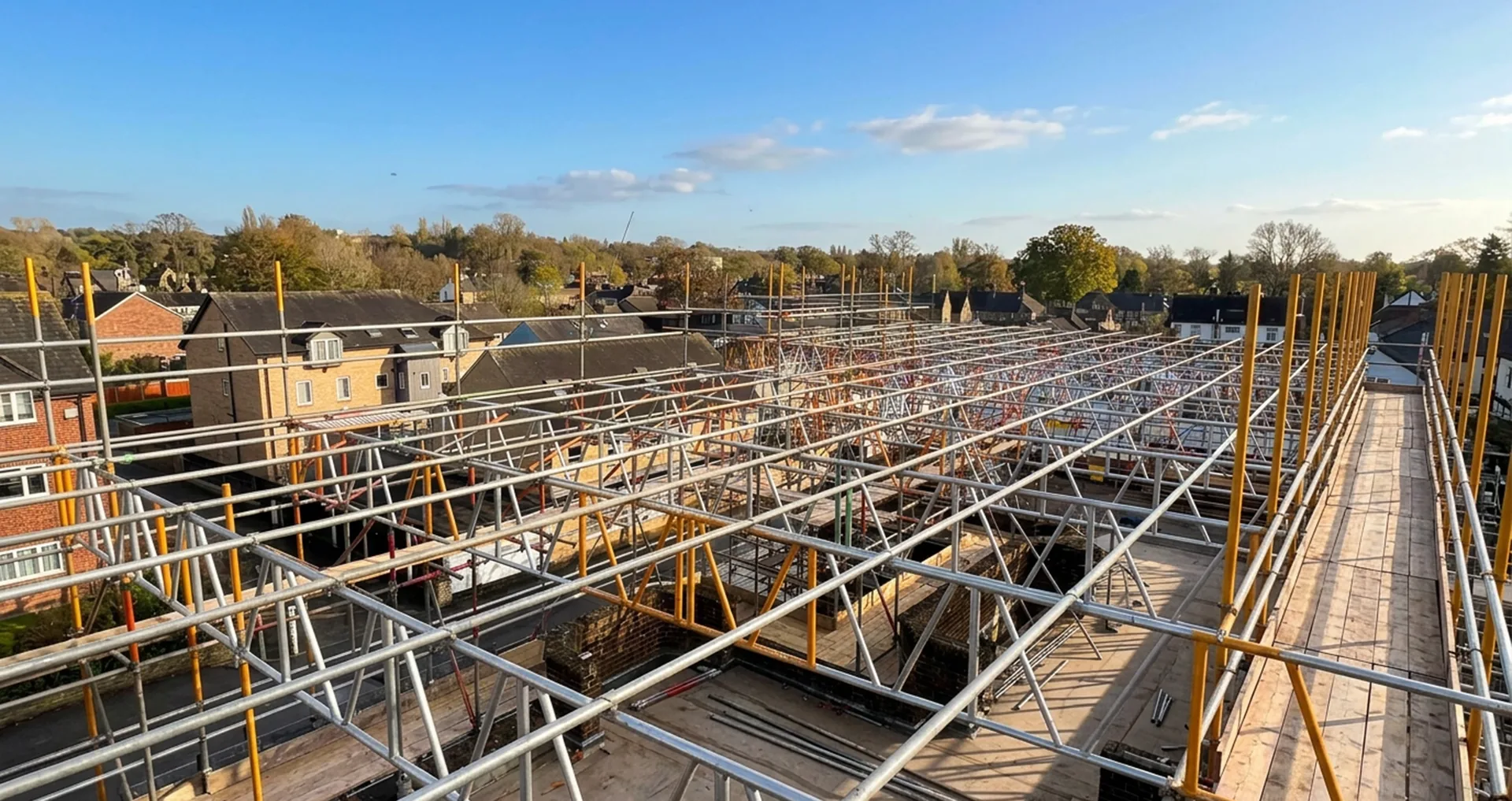
A temporary roof is a covered structure built over the top of a scaffold, spanning the building so work can continue underneath with the existing roof stripped back or removed entirely. It's the difference between a re-roof that runs to schedule and one that stops every time it rains.
The cost of not having one is rarely just lost days. Water getting into an open building damages ceilings, plaster and floors that were never part of the job, and those repairs come out of somebody's budget. On an occupied house or a working commercial building, that risk is usually the deciding factor.
Systems are built to suit the span and the job - sheeted or shrink-wrapped, with the pitch and clearance set by what needs to happen underneath.
Why choose us
Dry building, predictable programme
Work doesn't stop
Trades keep working through wet weather instead of standing down, which is usually where the cost of a temporary roof pays for itself.
The building stays dry
No water into open ceilings, floors or plaster while the roof is off - the damage that isn't in anyone's quote.
Built for the span
Pitch, clearance and covering are set by what has to happen underneath, not pulled off a standard spec.
When you need it
When a temporary roof is worth it
Full re-roofs and roof replacements, structural repairs where the roof has to come off, fire or storm damage reinstatement, and any roofing work over an occupied building where water getting in isn't an option. Longer jobs running through autumn and winter are the obvious candidates - if the programme spans weeks of British weather, the maths usually favours covering it.
Temporary roofs sit on top of a scaffold structure, so they're normally quoted alongside residential or commercial scaffolding rather than on their own. Where work happens above an area still in use, safety scaffolding can be built in underneath.
We install temporary roofs across Cambridge, Ely, Royston and the surrounding area - see all areas we cover.
How it works
How a temporary roof goes up
We look at the span
The building's width, height and what needs to happen underneath set the design - there's no standard size.
Scaffold first
The supporting scaffold goes up and is checked, because the roof structure loads onto it.
Roof and sheeting
Beams span the building and the covering goes on, sealed at the edges to keep weather out.
Off when the roof's on
Once the permanent roof is complete and watertight, the temporary structure comes down with the scaffold.
Questions
Temporary roofs, explained
Get a free quote
Tell us about the job and we'll come back with a clear price - no obligation.