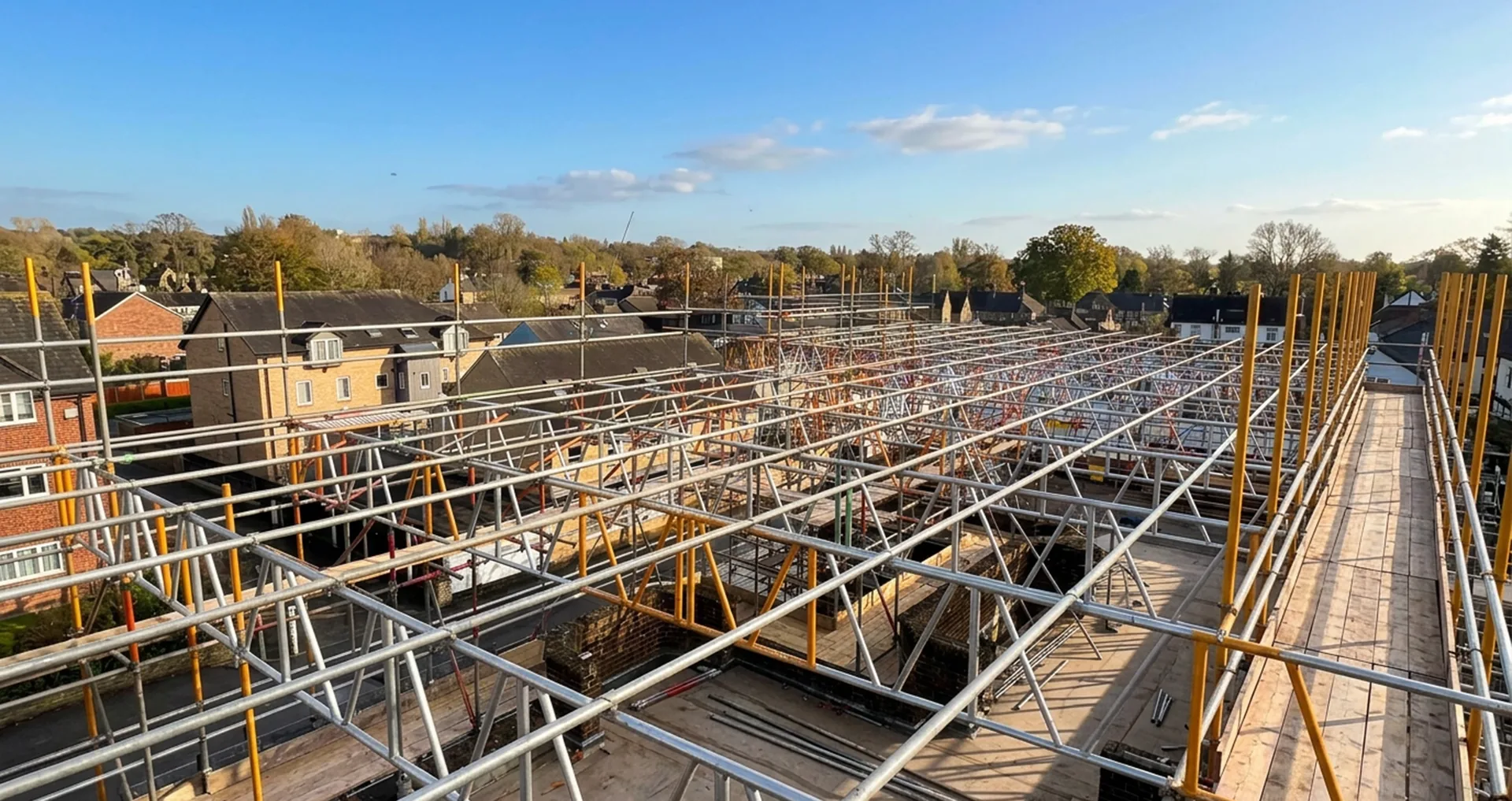
Scaffold for • Extensions & new builds
Scaffolding for extensions and new builds
A build doesn't stand still, and neither should the scaffold. We adapt the structure as yours goes up - rather than charging you to strike and start again.
Who we're talking to
Scaffold that grows with the build
Extensions and new builds are the one job where the scaffold has to change several times before it comes down.
If you're a homeowner
You're extending and the builder needs access
On an extension the scaffold usually goes up in stages - first for the brickwork, then raised for the roof structure, then adapted again for guttering, render or windows. It's normally up for the length of the build rather than a few days.
Because it's a long hire with several changes, the thing to get clear up front is what's included. We quote the adaptations in rather than treating each visit as a new job.
If you're a builder or main contractor
You need it to keep pace with the programme
Scaffold that isn't raised when the brickwork reaches it holds up your whole sequence. We'd rather be told the programme at the start and plan the lifts around it than get a call the morning your team is stood waiting.
Loading bays, material lifts and access for the roof stage all get designed in from the start where you tell us they're coming.
The jobs
Build stages we scaffold for
Brickwork and blockwork
Lifts raised as the walls go up, at bricklaying height rather than wherever the last lift happened to land. Loading points where the material is landing.
Roof structure and covering
Once the walls are up the scaffold has to serve the roof - see scaffolding for roofing for what changes at that stage.
Steel and structural work
Heavier loads and often crane access to work around. Worth flagging early because it changes the design, not just the height.
Fascias, guttering and finishing
The last stage, and often where scaffold sits idle if nobody tells us the job's nearly done. One call and we book the strike.
Render and external finish
If the extension is being rendered, the scaffold needs to suit wall work as well as construction - see scaffolding for rendering.
New build plots
Progressive scaffold from slab to roof, adapted as each stage completes. Longer hire, more adaptations, and worth quoting as a whole rather than piecemeal.
Cost
Long hires and adaptations - where the cost really sits
An extension scaffold is rarely one structure. It gets raised, adapted, sometimes partly struck and rebuilt as the shape of the building changes. The number that matters is the whole-job cost including those visits, not the price of the first lift.
That's the question worth asking any scaffolder: is each adaptation a new charge? We'd rather quote the likely stages up front so you can budget the whole build than hand you an invoice every time the walls get higher.
Beyond that it's the usual drivers - footprint, height, and whether there's room for the lorry and a loading point. We scaffold extensions and new builds across Cambridge, St Neots, Huntingdon and the surrounding area - see all areas we cover.
How we work
Keeping pace with the build
Planned around the programme
Tell us the stages at the start and the lifts get designed for them rather than reacted to.
Adapted, not rebuilt
Raising and altering what's there beats striking and starting again - it's quicker and it costs you less.
Struck when the job's done
Long builds often leave scaffold up out of habit. One call when the finishing trades are off.
Questions
Extension scaffolding, explained
Get a free quote
Tell us about the job and we'll come back with a clear price - no obligation.